and it has nothing to do with socialism or Usborne books.
Do the Common Core Standards Flunk History?
published on the History News Network, written by Craig Thurtell, a former teacher at Ardsley High School in Ardsley, New York.
Well worth reading.
and it has nothing to do with socialism or Usborne books.
published on the History News Network, written by Craig Thurtell, a former teacher at Ardsley High School in Ardsley, New York.
Well worth reading.
Mad Men and American Liberalism in 1968, by Ed Driscoll.
A brilliant recap of just what a very wild year 1968 was.
I plan to have my high school students read this to help understand America’s Suicide Attempt: The 1960s.
One of the things I dislike intensely is the attempt to re-write history.
The assertion that the 2nd amendment was never intended to allow private citizens to own military style weapons is a particularly obnoxious, ideologically-driven example of willful ignorance.
Other writers have done extensive research on the intentions and meanings of the amendment to those who proposed, adopted & ratified the amendments in 1791.
 Overlooked in the debate (at least so far I haven’t seen any citation) has been the quiet, ongoing work of providing military rifles and training to citizens carried out by the Civilian Marksmanship Program for the past 110 years. Recently converted to a congressionally chartered 501(c)(3) corporation, the CMP continues to receive donated .22 and .30 caliber rifles directly from the US Army and provides them at cost to civilians. Before 1996, the CMP was administered directly by the US Army.
“Any U.S. citizen who is not legally prohibited from owning a firearm may purchase a military surplus rifle from the CMP, provided they are a member of a CMP affiliated club.” There are CMP clubs in all 50 states. There are 139 such clubs in TN alone.
The CMP has been providing military grade weapons to US citizens since 1903.
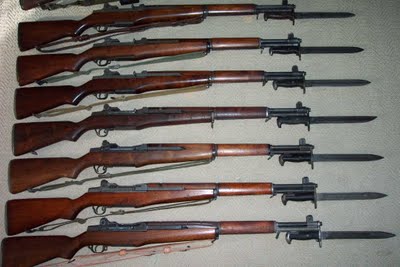 The main infantry battle rifle of WW2, the Garand M1 has been available for years, and continues to be sold – including “sniper” models. You can also buy a Garand bayonet.
Oh, and by the way, the M1 Garand clip (it uses a clip, not a magazine) holds 8 rounds. Every M1 Garand 8-round clip has just been declared a prohibited, contraband item by the New York state legislature – at the same time that the US government is supplying those clips from their armory surpluses to the CMP for sale to civilians.
Military-style rifles, with high-capacity clips, and not just bayonet lugs, but actual bayonets – sold the the US public by the US Army. The horrors!
And a stubborn fact that destroys the argument that the 2nd amendment was never intended to allow civilians to own military-style rifles.
“For 110 years, the numbers stood as gospel: 618,222 men died in the Civil War, 360,222 from the North and 258,000 from the South — by far the greatest toll of any war in American history.
But new research shows that the numbers were far too low.”
The new number, fairly well reasoned, is 750,000.
an article from the NY Times worth reading:
Civil War Toll Up by 20 Percent in New Estimate – NYTimes.com.
a speech given by Rob Shearer at Lipscomb University on Dec 3rd, 2011
part of a Limited Government Seminar sponsored by the Lipscomb University College Republicans
My topic today is the birth of liberty in Europe.
Well, it was born in Europe wasn’t it?
Every generation thinks it was the first to discover sex, so I guess every nation believes it was the one to discover liberty.
I hope to shatter a few illusions this morning. I want to broaden your horizons.
I am going to boldly assert that as young healthy American college students there are a number of things that you believe that aren’t true. Just as a fish never really notices the water, all of us, are usually oblivious to what Emmett Tyrell calls the Kultursmog.
Let me start with three small observations:
The one assertion you can confidently make about human nature over the course of 4,000 years of recorded history is that it has not evolved. In fact, it would be difficult to prove that human nature has appreciably changed.
I would challenge you to read the literature of the ancient world, or the medieval world, or the renaissance or the reformation. If you do, I think you’ll find something surprising. The thoughts, emotions, desires and aspirations of those people will be instantly recognizable and understandable. In truth, they are just like us.
Read the Bible. Read the Hymn to Aton by Pharaoh Akhnaton. Read the Epic of Gilgamesh. Read Homer. Read Augustine
The people they describe are JUST. LIKE. US.
And they aspired to liberty – individual liberty, political liberty, JUST. LIKE. US.
We didn’t invent the idea of liberty.
It has a long pedigree, with roots back into the ancient world.
And the record of European history, of Western Culture, shows some remarkable periods in which political liberty was achieved.
We are the heirs to that rich European culture.
Our ideas about religion, philosophy, politics, and government have all come to us directly from Europe or through Europe.
But the development of liberty in western culture has followed a long and tortured path. It has not been the steady path of progress. There have been fits and starts. Achievement and decay.
It was anything but inevitable.
Now there is a school of history that believes that the course of history is pre-ordained, and unfolds by inexorable laws. Macaulay, Hegel, Marx and Calvin all have one thing in common. They all believe in predestination.
Calvin… well, let’s leave Calvin out of this. He gets enough grief as it is. I don’t wish to trouble him this morning.
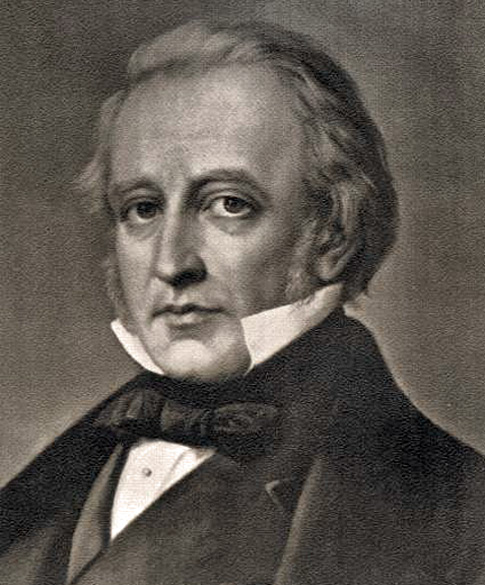 Thomas Babington Macaulay was the great Whig historian of 19th century Britain. For Macaulay, all of recorded human history was simply documentation of the unfolding idea of freedom which came to its fulfillment in that best of all possible representative constitutional, representative governments – 19th century Britain.
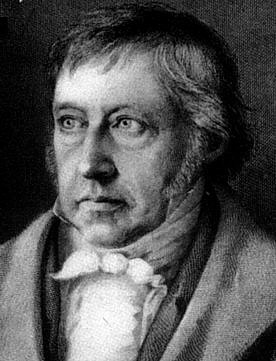 Hegel is the great German philosopher of the 19th century. For Helgel, all of recorded human history was simply the record of the unfolding and developing idea of freedom, which, by way of the dialectic, revealed itself in ever more refined and perfect fashion until it reached its culmination in 19th century Germany.
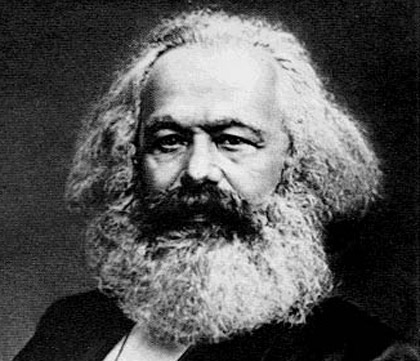 Marx believed that all of recorded human history is simply the clash of economic classes and forces and that the course of history was certain and determined and would inevitably lead to the overthrow of each imperfect intermediate form of government until history was fulfilled in the workers’ paradise of a true communist state where the private ownership of capital would be abolished, and rule by the dictatorship of the proletariat. He thought that this would inevitably happen first in the most industrialized nations of the 19th century: either Britain, Germany, or the United States. Such a revolution, of course, could never occur in the less developed more rural nations on the edge of Europe or outside of European civilization. Certainly never in a country as backward and agricultural as Russia (where they still had serfs when Das Kapital was written!)
We laugh at the naiveté of these historians now… and think them parochial for advancing their own nations as the high point of history.
And then, of course, we’re guilty of the same thing.
We order the past to show how several thousand years of history were but prologue to the inevitable and pre-ordained emergence of the American republic.
This notion of history (quite widely and popularly held) is why many of the American historians of my generation have gone out of their way to attack the virtues of the founders.
The truth is, the founding of the American Republic is a remarkable and rare event in history.
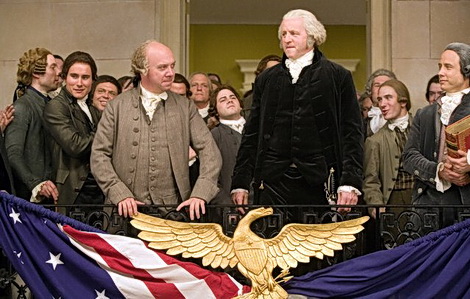 Let me reassure you that I admire and revere the founders of the United States. I believe that Washington, Adams, Jefferson, & Franklin were remarkable and praiseworthy men.
But I want to suggest to you this morning that the founding of the American Republic was not as original as we sometimes think… nor was it inevitable.
So let me go back to the western European history and highlight places where Liberty appears.
But first, let me point out that Liberty & Law are inextricably intertwined.
Liberty is not license or lawlessness.
In fact, there can be no liberty without a recognized body of law (Hobbes & Locke had much to say about this, but let me come back to them later.)
Liberty depends upon a shared, recognizable concept of law – natural law.
Liberty and natural law are intertwined.
The notion that there is a natural moral law that is intrinsic, built-in to the universe, and discoverable is an idea with a long pedigree. It was something the Jews, the Greeks, and the Romans all agreed upon. They might have disagreed with each other over who was the author of this law, or over some of the particulars, but they all agreed and acknowledged that natural law was an objective fact.
The birth and expansion of liberty has deep roots. It is a long tale.
Now of course, modern Europeans have abandoned the idea of natural law – just as they have abandoned the notion of objective truth. This doesn’t mean that either have ceased to exist – only that the Europeans have ceased believing in them.
But a belief in natural law and a devotion to discovering, or at least outlining, its details is a central part of the story of liberty in western culture.
But natural law by itself does not generate personal liberty, or political liberty.
Personal, political liberty depends upon the notion that natural law limits the actions of everyone in society.
Tyranny, despotism, oligarchy, aristocracy all are antithetical to liberty, because they all believe that there are some people who are not obligated to obey natural law.
Liberty is achieved to the extent that the wealthy, the privileged, the aristocrats, the king and his officers are all forced to obey, equally the natural law.
So long as there are some people who are above the law, liberty is curtailed.
When all are equal before the law, there is liberty.
THAT idea as you might imagine took a long time to succeed.
To achieve liberty, you must limit government. You must limit the king. You must limit the kings officers.
And they’d rather NOT be limited or held accountable, thank you very much – so they resist.
The struggle to achieve liberty then is a struggle to limit government – not to throw off the natural law, but to bring everyone under the law.
Let me outline for you briefly some highlights in the history of the struggle to achieve liberty – the struggle to limit government
It is useful to remind us how costly the struggle has been, how much patience and perseverance it has taken to guard the spark and flame over long centuries, and how irregular the course was. The many setbacks are a useful reminder to us that the unfolding of liberty was anything but inevitable.
In the ancient world, you can do no better than to make a comparative study of the political history of Israel, Greece, and Rome – coincidentally, the three streams of political thought & philosophy which lie at the heart of western European culture.
 And in all three you find a curious sequence of events. The unfolding of liberty is not a linear tale of progress. Israel is ruled by Patriarchs & Judges, then by Kings. The kings (as prophesied) are more oppressive in their rule than were the judges, and to make matters worse the Kings, over time get progressively worse, not better! In fact you could argue that a graph of the political history of Israel has a downward slope – the opposite of progress.
Hmmm…
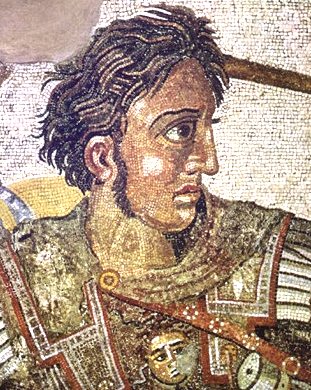 Well, let us turn to Greece. The political history of the Greek city states is rich and varied. And the Greeks give us the democracies of the city-states like Athens, Corinth, and… Sparta? Wait. How many of you saw The 300? The Spartans represent a strand of Greek culture that values honor and the battle-skills of well-trained soldiers far above liberty. And over time, which strand of Greek culture came to dominate. Did the Greek city states gradually merge into a larger, representative political union? No, in fact the Greek city states either succumbed to their own demagogues and tyrants, or in the end they were conquered by Alexander and his Macedonian phalanxes, and came under what can only be described as a military dictatorship.
How would you graph liberty over the history of ancient Greece?
And now, let us turn to Rome.
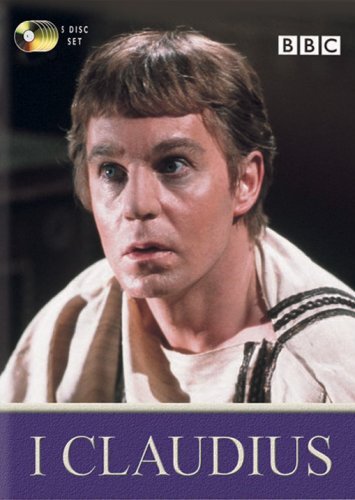 The Romans achieved remarkable stability in their government and successfully pacified and governed the entire Mediterranean world – the pax romana. And Rome was a republic. The republic held elections for the office of consul every year. And the Roman republic achieved political stability by dividing political authority – not just between two co-equal consuls, but between consuls and senators and a host of other prominent officials.
But what happened to Rome? How do we explain/ what answer do we give to Gibbon’s great historical work titled The Decline and Fall of the Roman Empire? (published in 1776, by the way – this is called foreshadowing)?
Actually, I think Gibbon’s work asks the wrong question. It’s not really even all that very interesting a question. He thought the answer was that Christianity had undermined the old Roman virtues and weakened Rome. I think that’s a preposterous answer by the way. But Gibbon work asks the wrong question.
The much more interesting, much more important question is “Why did the Roman Republic fail?” Not the Empire, the REPUBLIC! Why did Rome cease being a Republic and become an Empire.
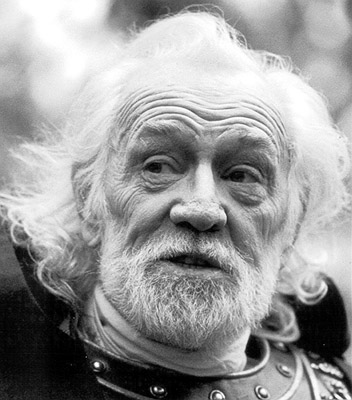 The peak of Roman civilization is during the days of the Republic. When the Republic fails and Rome becomes an Empire it is a sign that things have already gone badly wrong. The Roman Emperors were not nice men. That fact is masked for us, because in the movies they always speak with British accents and seem refined and cultured. But they were not nice men. Almost every single one of them was a general and owed his title to the backing of the army. The ugly truth (seldom spoken) is that the Roman Empire was a military dictatorship. And like many military dictatorships, the most frequent method of regime change was a military coup. Roman Empire is a misnomer. It was not so much the Roman Empire as it was the Roman Banana Republic – 500 years of military dictatorship.
So the real, important question to be asked of Roman history is not why did the Empire fall, It’s why did the Republic fall? Why did it cease to hold elections and turn into a military dictatorship?
I challenge you to take up the study of Roman history. The answer to that question is fascinating, and frightening.
I could say much about the Middle Ages and the Germanic kingdoms that succeeded Rome. Here again, our nomenclature is misleading. Rome was not conquered by the Germanic tribes. The Germanic tribes had no kingdoms of their own. They were homeless. They crossed the frontier of Rome (the Danube River) as illegal immigrants. And the hollow and rotted out shell of the Roman Empire collapsed under the weight of their migrations.
And in one of the great ironies of church history, barely a century after the urban, lower-class persecuted Christian church had succeeded in converting the Roman aristocracy, Rome was conquered by pagan barbarian tribes and it would take several more centuries for the conquered Roman Christians to convert their Barbarian masters.
Much could and should be said about the development of law and liberty in medieval and renaissance Europe. The struggles of the 12th & 13th century led to The Great Charter of the Liberties of England, and of the Liberties of the Forest – a radical notion that the king was bound by the law.
That notion was more prominent in the late Middle Ages and then was rejected by the monarchs of the 16th & 17th centuries who claimed to rule by direct authority from God. England went through a civil war and ten years of military dictatorship sorting that out. The result brought the king’s back under the authority of the Magna Charta and the law. One could argue that Locke, Hobbes, and the Glorious Revolution were a recovery and revival of early medieval notions of kingship.
But I want to come back to that bit of foreshadowing I spoke of before. I don’t want to steal the thunder of the next figure, but I want to make an important point about the connection between liberty in the United States and liberty in Europe.
I mentioned that Gibbon published The Decline and Fall of the Roman Empire in 1776. His work typified the ongoing study of the ancient world which had been revived in Europe at the end of the middle ages.
At the end of the Middle Ages came a period of time dubbed the renaissance or rebirth because of a widespread movement which sought to revive the ancient world. Across European culture, for several centuries, there was an intense interest and devotion to studying Greece and Rome. It began with a revival of languages and literature. It spread to a revival of artistic styles and subjects. The protestant Reformation itself fits organically into this cultural preoccupation with reviving the classical world. This fascination with the ancient world persisted for several centuries. It was the exact opposite of our modern notion of progress. Renaissance men did not believe that everyone who had lived before them was stupid and insignificant. Rather, they believed that the wisdom of the ancient world had been tragically lost and that it could and should be rescued and revived. The motto of the Renaissance was “ ad fonts” – back to the sources.
The culture of the 18th century, the 1700s in America was still the culture of the Renaissance, with an emphasis on studying the classics of Greece & Rome. The culture of the Enlightenment and the rejection of authority and the past was just developing in Europe – but not yet in North America. The colonies were not on the cutting edge of cultural trends. They were a cultural backwater, lagging behind and maintaining the attitudes and culture of earlier centuries.
And what model did the American colonists turn to when they wished to establish a new form of government, independent of the British monarchy? They consciously chose the form and features of the Roman Republic – with an eye towards avoiding its deficiencies, but with a thoughtful recognition that it had governed the Roman World successfully for 500 years.
And so I would assert that the founding of the Roman Republic is the last expression and accomplishment of the spirit of the Renaissance. It looks backwards to the ancient world for guidance and wisdom. The renaissance began with language and literature and spread to the arts. The spirit of the renaissance, when applied to the problems of the church produced the upheavals of the protestant reformation.
And then finally, the renaissance results in the revival of ancient political thought and forms and the founding of the American republic.
The American revolution looks back to the ancient world. The French revolution is a horse of a different color. Its spirit is almost the antithesis of the renaissance. It rejects all past authority. It treats all ancient authority with suspicion and contempt. The proximity in time is misleading. They not the expressions of the same cultural movement, they are the antithetical expressions of two separate and opposite cultural movements.
So. The origin of Liberty in Europe took us back to ancient Rome, via the Renaissance.
And the cautionary part of that tale is that each expression of liberty which I have mentioned was not marked by a slow, steady progressive improvement. Rather in Israel, in Greece, in Rome, in the Middle Ages there are brief, compressed, miraculous expressions and instantiations of Liberty. But they do not last. They decay, they decline, they rot. Sometimes quickly, sometimes slowy. But they do not build upon each other brick on brick, course on course.
The course rather is a sawtooth pattern. Liberty is achieved… and then begins to fade, and often seems to disappear – until another generation comes along and is miraculously empowered to create a culture, a movement, a political nation where liberty becomes real.
May your generation be such a miraculously empowered generation. Because we do not need progress. We need a renaissance of liberty. We need a revival of liberty.
Thank you.
It does not matter what the United Nations may have said. The President of the United States may not commit us to war without authorization by the US Congress. President Obama has ordered the United States military to commit acts of war against the nation of Libya. That he has (so far) only authorized cruise missiles and bombing raids does not make the actions anything other than acts of war.
The President’s impulsive decision to intervene militarily in the rebellion/civil war in Libya is foolish in the extreme. It demonstrates hubris, hypocrisy, and contempt for the Constitution. And a shocking ignorance of history and the dynamics of foreign policy.
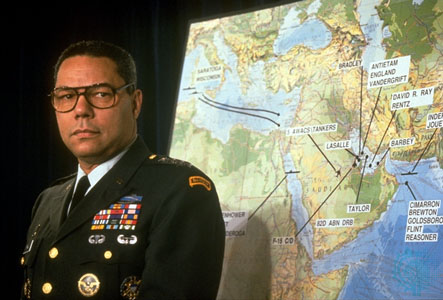 And a clumsy disregard for the “Powell Doctrine” (which more accurately ought to be called the “Weinberger Doctrine”):
 My overwhelming first response is: A LOT of people owe George W. Bush an apology about now. Starting with Barack Obama, Hilary Clinton, and the editorial boards of NPR and the New York Times.
Perhaps the most jarring, maddening aspect of Obama’s military adventurism is his total disregard for the constitutional limitations on the president’s use of military force. Bush sought, and received, congressional authorization for the use of armed force in Iraq. It passed the House 297-133 and the Democratically controlled Senate 77-23. A MAJORITY of the Democratic Senators (29-21) voted for it! The TITLE of the Bill was The Authorization for Use of Military Force Against Iraq Resolution of 2002!
Obama is relying exclusively on a vote of the United Nations Security Council for his decision to make limited war on Libya. He has done this without ANY authorization from Congress.
I’m listening for the howls of outrage from Harry Reid and Nancy Pelosi, but all I’m hearing is…. [crickets chirping].
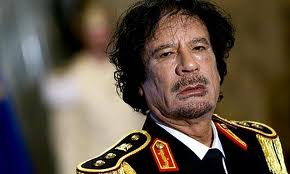 I will stipulate to the court that Muammar Gadaffi is a tyrant. I pray for his overthrow and a grant of freedom and a peaceful representative government to the people of Libya (as many did in both Egypt and Tunisia earlier this year).
However, I am ever mindful of the principles of John Quincy Adams. 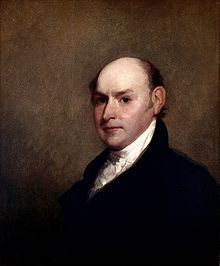 Even before he was elected president, Adams was (and remains) our most experienced foreign diplomat ever. At 11, he went with his father to France. At 14, he went as Secretary to the US mission to Russia. At 26 he was US Ambassador to the Netherlands. At 30, he was our Ambassador to Prussia. He served in the MA legislature and the US Senate. Finally, in his 40’s he was our ambassador to Great Britain, before being appointed Secretary of State in 1817 by the newly elected President James Monroe. The famous “Monroe Doctrine” which warned the european powers to stay out of the affairs of the Western Hemisphere was formulated by John Quincy Adams, though it acquired its name from the President rather than the author.
Let me quote from Adams’ speech on July 4th, 1821:
Wherever the standard of freedom and Independence has been or shall be unfurled, there will [America’s] heart, her benedictions and her prayers be.
But she goes not abroad, in search of monsters to destroy.
She is the well-wisher to the freedom and independence of all.
She is the champion and vindicator only of her own.
She will commend the general cause by the countenance of her voice, and the benignant sympathy of her example.
She well knows that by once enlisting under other banners than her own, were they even the banners of foreign independence, she would involve herself beyond the power of extrication, in all the wars of interest and intrigue, of individual avarice, envy, and ambition, which assume the colors and usurp the standard of freedom.
The fundamental maxims of her policy would insensibly change from liberty to force….
She might become the dictatress of the world. She would be no longer the ruler of her own spirit….
[America’s] glory is not dominion, but liberty. Her march is the march of the mind. She has a spear and a shield: but the motto upon her shield is, Freedom, Independence, Peace. This has been her Declaration: this has been, as far as her necessary intercourse with the rest of mankind would permit, her practice.
Afghanistan was the base from which murderous attacks on the United States were launched. We had a right and a duty to respond with military force, though I differ with Presidents Bush and Obama on the wisdom of continuing to remain there.
Iraq invaded an ally of the United States and we were obligated by treaty to come to her defense, and join the war against Iraq. For ten years thereafter, Iraq repeatedly violated the terms of the cease-fire in that first Gulf War and repeatedly provoked and played games with International Inspections that she had agreed to. Both the United Nations and the United States Congress had had enough by 2002.
And Libya? Gaddafi is a tyrant and deserves to be overthrown. He’s the 2nd longest ruling tyrant in the world. But that begs the question, “Why haven’t 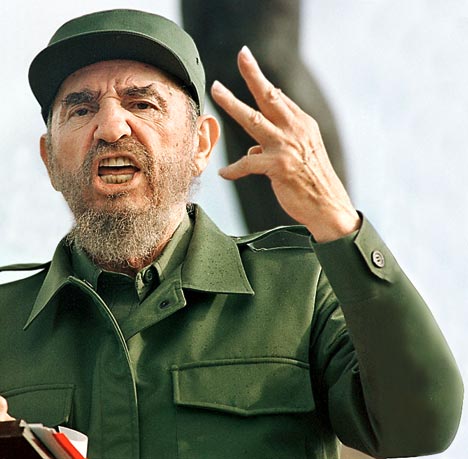 we launched cruise missiles at Havana?” There are a half a dozen other tyrants who rule cruelly and unjustly. Shall we attack them all?
Obama has now launched more cruise missiles than all the other Nobel Peace Prize Winners. . . combined! And in the words of Michael Moore (oh sweet irony!), perhaps we should declare a 50 mile quarantine around Obama’s Nobel Peace Prize.
Seriously, Obama’s hypocrisy, his hubris, and his disregard for the Constitution are dangerous.
One of the writers I am working with on a new book (more on that later) said something profound a while back: “You do not know who you are until you know who your grandparents were.”
I’d actually expand on that a bit. I would say, “You do not know who you are until you know who your great-grandparents were.”
I’ve spent some time off and on over the past ten years doing some genealogical research on my ancestors. It’s been fun and has helped to personalize history. I enjoy telling the stories to my kids. Among other things, I’ve discovered that we’re descended from two of the Mayflower passengers (John Howland & Elizabeth Tilley), as well as from Robert the Bruce and Edward I.
I’ve had the benefit of an active set of Clarkson relatives who’ve done lots of research on the Clarkson clan in SC – Georgetown, Charleston, & Columbia. One of my great-grandfathers has held special interest for me – Henry Mazyck Clarkson. Born in 1835, a med school graduate, he served in the CSA from Dec 1860 through the end of the war – most notably as a surgeon at the battle of Gettysburg. After the war, he practiced medicine, wrote poetry, and was, for a time, superintendent of schools in Prince William Co., VA.
Today, I discovered that another of my great-grandfathers was also an officer in the CSA during the civil war and was a veteran of many of the important battles of 1861 & 1862. I found this out sorting through some of my mother’s genealogical notes. At one point, she had transcribed the grave markers in West View Cemetery in Atlanta GA. I knew the birth & death dates for my great-grandfather, but I was startled to see, in my mothers handwriting, a third line from the tombstone:
Robert H. Atkinson
Oct 16, 1838 – July 17, 1886
Capt. Co. C First Ga. Regulars CSA
I spent some time online researching the First Ga. Regulars and my great-grandfather. Turns out, he was a graduate of the Georgia Military Academy of Marietta, GA in 1862. I’ve written off for his CSA service records, but Co. C was organized in April of 1861. They fought in the Seven Days Battles in Virginia in 1862 (including at Malvern Hill), and then at 2nd Bull Run, Antietam, and Fredericksburg.
After Fredericksburg, it seems they were sent home on leave, to recoup, refit, and recruit replacements back in Georgia. In 1863, my great-grandfather married a young lady from Charleston, SC named Cordelia Dessau. He was 25 and she was 20. Of great interest to me is the fact that her family were German Jews. Her father, Abraham Dessau, born in 1802, had emigrated from Hamburg, Germany some time before 1843. I have remembered seeing a faded picture of a couple being married under a Jewish canopy, and I feel sure this must have been Robert Holt Atkinson and Cordelia Dessau – married in the middle of the Civil War.
My other two great-grandfathers (everybody has four!) were too young to have fought. Malcolm Graham Waitt (1854-1932) was only seven when the war broke out. William Hardin Watts (1861-1940) was born just a month before Fort Sumter.
My great-grandfathers:
Henry Mazyck Clarkson (1835-1915) <- Surgeon with the Army of No. VA, CSA
William Hardin Watts (1861-1940)
Malcolm Graham Waitt (1854-1932)
Robert Holt Atkinson (1838-1886) <- Captain, Co. C First Ga Regulars, CSA
A shameful episode in American history:
“Andrew Jackson mobilized the federal government behind the expropriation and expulsion of a racial minority whom he considered an impediment to national integrity and economic growth. Before the end of his two terms, about forty-six thousand Native Americans had been dispossessed and a like number slated for dispossession under his chosen successor [Martin Van Buren].”
[. . .]
“Of course, the blame for the dispossession and expulsion of the tribes must be widely shared among the white public, and even a sympathetic administration found it difficult to protect Indian rights, as John Quincy Adams’ experience proved. But Jackson’s policies encouraged white greed and made a bad situation worse.”


We have a new kitten in house. Various names have been suggested. Amelia almost stuck (cat = female aviator?). Then it was shortened to ‘Melia. Recently I have noticed the children referring to the kitten as Meow-Meow, which has inevitably been shortened to Mau-Mau (or is it Mao-Mao?).
All of which got me to musing this morning over coffee with Cyndy about Tom Wolfe and his wonderful essay “Mau-Mauing the Flak Catchers,” which was published in 1970. Dating myself, I know, but Wolfe remains arguably the best writer on the curiosities of American culture from the 1960s through the 1990s.


“Flak-catcher” is a neologism coined by Wolfe – he also gave us such phrases as “radical chic,” “the Me decade,” “the right stuff,” and “good ol’ boy.” I’m not kidding you – the phrase “good ol’ boy” was coined by Wolfe in a .
Back to “flak-catcher.” According to Wolfe, the flak-catcher is the No. 2 or the No. 3 guy in any organization (or any assistant to the top guy) who is assigned the onerous task of handling complaints – especially complaints delivered in person by a group of angry people. Here’s a relevant passage describing an underling fielding questions from an angry mob of militants, “And then it dawns on you… This man is the flak catcher. His job is to catch the flak for the No. 1 man.”
Mau-mauing then, as described by Wolfe, is the kabuki theater in which members of an ethnic group stage a confrontation with authorities in order to extract money, grants, jobs, and other concessions. Wolfe spent some time observing how these performances were choreographed in San Francisco as various ethnic groups assembled at social service offices and demanded redress for their grievances.
“Mau-mauing the flak catcher” is the art of assembling a group, demanding a public meeting, presenting your demands, doing one’s best to appear threatening and scary, and then grudgingly accepting the money and other compensation proffered by the flak catcher.
Here’s how Wolfe describes it:
Going downtown to mau-mau the bureaucrats got to be the routine practice in San Francisco. The poverty program encouraged you to go in for mau-mauing. They wouldn’t have known what to do without it. The bureaucrats at City Hall and in the Office of Economic Opportunity talked “ghetto” all the time, but they didn’t know any more about what was going on in the Western Addition, Hunters Point, Potrero Hill, the Mission, Chinatown, or south of Market Street than they did about Zanzibar. They didn’t know where to look. They didn’t even know who to ask. So what could they do? Well … they used the Ethnic Catering Service … right … They sat back and waited for you to come rolling in with your certified angry militants, your guaranteed frustrated ghetto youth, looking like a bunch of wild men. Then you had your test confrontation. If you were outrageous enough, if you could shake up the bureaucrats so bad that their eyes froze into iceballs and their mouths twisted up into smiles of sheer physical panic, into shit-eating grins, so to speak–then they knew you were the real goods. They knew you were the right studs to give the poverty grants and community organizing jobs to. Otherwise they wouldn’t know.
The art of mau-mauing is still going on. . .
And our new kitten (whom I have tenderly nicknamed “psycho-kitty”) is the master of mau-mauing. She glares and threatens mayhem until you give in to her demands.
* flak, by the way, is a German abbreviation from WW2 which has found it’s way into English. When allied pilots encountered heavy anti-aircraft barrages during bombing runs over Germany, they referred to it as heavy “flak.” FLAK itself is the acronym for a Flieger-Abwehr-Kanone, or Flyer-Defense-Cannon – except that Germans don’t use hyphens in compound nouns, so they spell it Fliegerabwehrkanone. Aren’t you glad you asked?
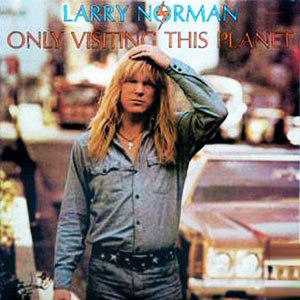
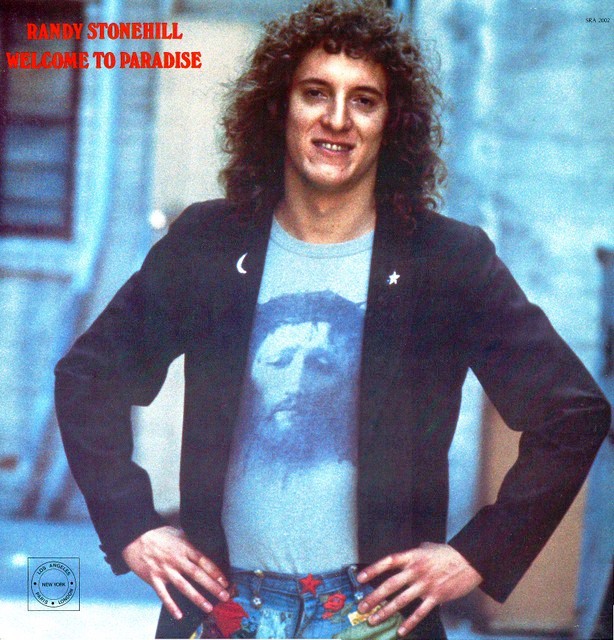
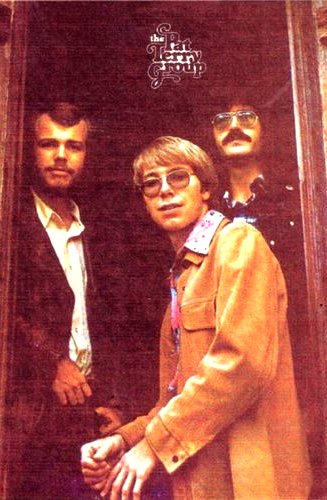
It’s been a day to reminisce about the Jesus Movement and the 1970s. In 1975, I was sophomore in college and teamed up with Bill Boyd (my future brother-in-law!) to host a Christian Music Show on Sunday mornings at WDAV. About all we had were a half-dozen albums by II Chapter of Acts, Larry Norman, Randy Stonehill, Barry McGuire, and later Pat Terry & James Ward. Keith Green came along a bit later.
 |
 |
 |
 |
Today, at church, we had a delightful 20 minute set by Randy Stonehill. He still has the wry sense of humor and commanding presence. “King of Hearts” brought tears to my eyes.
This afternoon, I watched “Fallen Angel,” the documentary on the life of Larry Norman. Larry was a revolutionary and a prophet and a musical genius. The movie will have its premier this week in Nashville. Here’s a preview:
More info on the film’s web site, here: http://www.fallenangeldoc.com/
In 1978, and 1979, I was part of the Inter-Varsity graduate group at Stanford. We arranged for a public lecture by Larry Norman (he brought his guitar and played a few songs as well), and then a full-bore concert by Randy Stonehill in the auditorium on campus. Randy brought the full band and played LOUD! But we loved it. Good times.
Here’s a clip of Larry singing one of his best-known songs, The Outlaw:
Here’s Randy singing King of Hearts:
I’m afraid James Ward and Pat Terry haven’t made it to YouTube, though I suppose there might be videos out there which will eventually be uploaded. They both have their own web sites though!


